Introduction: Why Drug Awareness Programs in India Matter More Than Ever
Drug abuse has become one of the most pressing public health challenges of our time, affecting millions of families worldwide. While headlines often focus on statistics and policy debates, the real battle against addiction is won through education, awareness, and prevention—long before substances ever enter someone’s life.
Drug awareness programs represent our first and most powerful line of defence against addiction. These initiatives reach people at crucial moments—when choices are being formed, peer pressure is mounting, and futures hang in the balance. Understanding how these programs work, what makes them effective, and how communities can implement them is essential for anyone committed to building a drug-free society.
This article provides a professional insight into the world of drug awareness programs in India, exploring everything from school-based initiatives to community-wide campaigns, and examining what actually works in preventing substance abuse before it starts.
Understanding Drug Awareness Programs in India: More Than Just “Say No”
Early drug prevention campaigns famously urged people to “Just Say No.” While well-intentioned, research has shown that effective drug awareness goes far beyond slogans. Modern drug awareness programs in India take comprehensive approaches that address psychological, social, environmental, and educational factors contributing to substance abuse.
The Science Behind Effective Prevention
Early Intervention Works: Research consistently shows that prevention programs are most effective when they reach young people before experimentation begins—typically between ages 11-14, when curiosity about substances peaks but habits haven’t formed.
Knowledge Plus Skills: Simply knowing drugs are harmful isn’t enough. Effective programs teach practical skills for resisting peer pressure, managing stress without substances, making thoughtful decisions, and building self-esteem that doesn’t depend on peer approval.
Environmental Approach: Successful prevention doesn’t just change individuals; it shapes environments. This means engaging families, schools, communities, and even media in creating cultures where drug use becomes less appealing and acceptable.
Long-Term Engagement: One-time assemblies or single workshops rarely create lasting change. Effective programs involve ongoing engagement, reinforcing messages through multiple channels over extended periods.
Cultural Sensitivity: Programs must respect and reflect the cultural contexts of communities they serve, acknowledging that substance use patterns, risk factors, and effective messaging strategies vary across different populations.
Anti-Drug Workshops: Interactive Learning for Lasting Impact
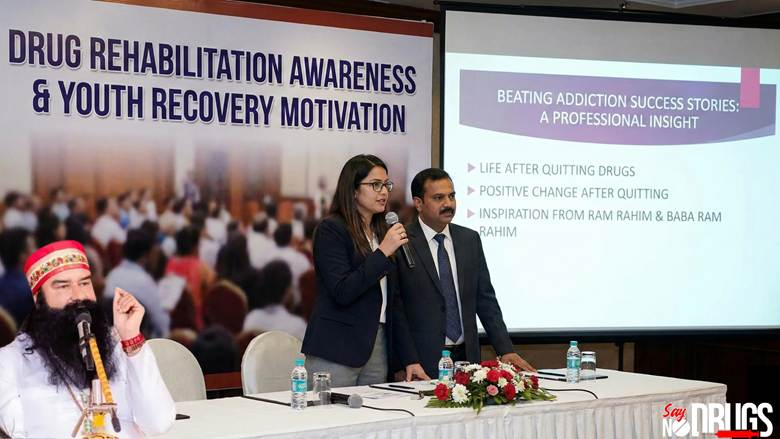
Anti-drug workshops form the cornerstone of many prevention efforts, bringing drug education to life through interactive, engaging formats that go beyond traditional lectures.
What Makes Workshops Effective?
The most successful anti-drug workshops share several characteristics:
Participant Engagement: Rather than passive listening, effective workshops involve participants through discussions, role-playing scenarios, group activities, and problem-solving exercises. When people actively engage with material, retention and behaviour change increase dramatically.
Real Stories, Real Impact: Hearing from individuals who’ve experienced addiction firsthand—whether they’re in recovery themselves or family members who’ve watched loved ones struggle—creates emotional connections that statistics cannot match. These personal testimonies often prove more persuasive than any lecture about health risks.
Practical Skill Building: Workshops that teach specific refusal skills—how to say no convincingly, how to leave uncomfortable situations, how to suggest alternative activities—give participants tools they can actually use when pressure arrives.
Interactive Demonstrations: Some workshops use powerful visual demonstrations showing drugs’ physical effects, interactive exhibits displaying how substances impact brain function, or technology-based simulations that make abstract concepts tangible and memorable.
Safe Discussion Spaces: Creating environments where young people feel comfortable asking questions, sharing concerns, and discussing peer pressures without judgment encourages honest dialogue that can lead to better decision-making.
Workshop Formats That Work
Different settings call for different workshop approaches:
School Assembly Programs: Large-group presentations work best when they’re engaging, emotionally compelling, and followed by smaller classroom discussions where students can process what they’ve learned and ask questions.
Small Group Sessions: Intimate settings of 10-15 participants allow for deeper discussions, more personalised guidance, and stronger relationship building between facilitators and participants.
Peer-Led Workshops: Training slightly older students to facilitate sessions for younger peers leverages the natural influence young people have on each other while empowering peer leaders with purpose and responsibility.
Family Workshops: Programs that engage entire families recognise that parents’ attitudes, communication styles, and monitoring behaviours significantly influence children’s substance use risk.
School and College Awareness Activities: Education Where It Matters Most
Educational institutions provide ideal settings for school/college awareness activities because they reach young people during formative years when prevention can have maximum impact.
School-Based Program Components
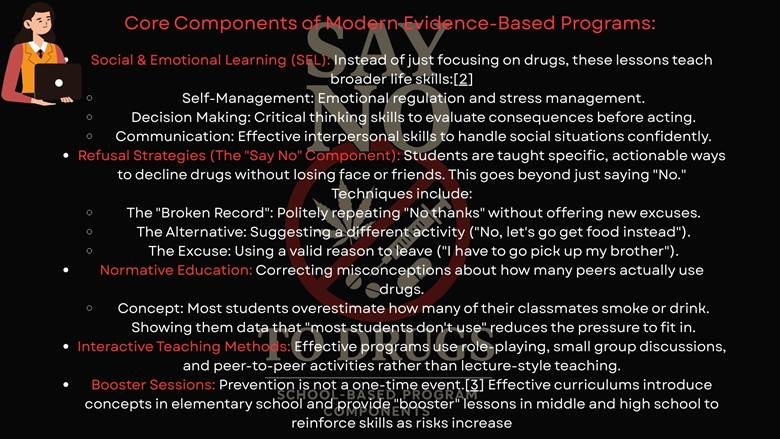
Comprehensive school programs typically include multiple elements:
Curriculum Integration: Rather than isolated drug education units, effective schools weave substance abuse prevention throughout health classes, science courses (studying drugs’ biological effects), social studies (examining societal impacts), and even literature (analysing stories involving addiction).
Extracurricular Activities: Drama clubs performing anti-drug plays, art projects creating prevention posters, student organizations leading awareness campaigns, and sports programs emphasizing healthy lifestyles all reinforce prevention messages through activities students enjoy.
Peer Education Programs: Training student ambassadors to educate classmates creates networks of positive influence throughout schools. Peer educators often communicate more effectively with fellow students than adult authority figures can.
Parent Engagement Initiatives: Schools that offer parent workshops, send home educational materials, and create parent-school partnerships around prevention multiply their impact by ensuring consistent messages across home and school environments.
Policy and Environment: Clear drug policies, consistent enforcement, and school cultures that celebrate healthy choices create environments where substance use becomes socially undesirable and practically risky.
College and University Programs
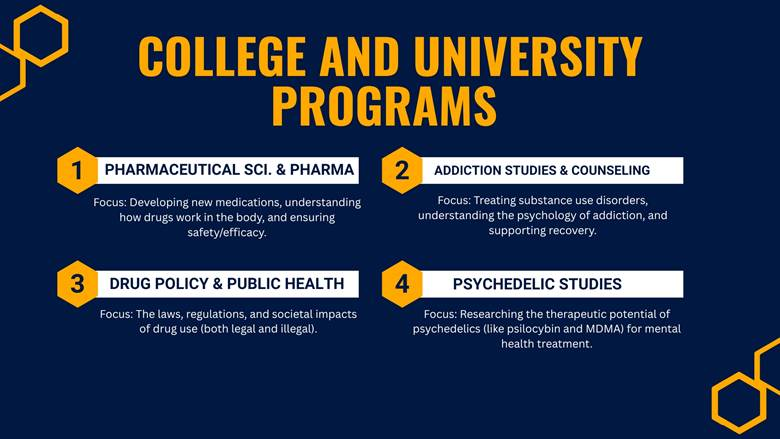
Higher education settings face unique challenges—students living independently for the first time, widespread party cultures, and the perception that experimentation is a normal part of the college experience. Effective college programs address these realities directly:
Orientation Programs: Introducing incoming students to campus resources, clarifying policies, and establishing expectations early helps set positive trajectories before problematic patterns develop.
Social Norming Campaigns: Many students overestimate peer substance use, assuming “everyone’s doing it.” Campaigns sharing accurate data about actual student behaviour can reduce perceived pressure to conform to inflated norms.
Alternative Programming: Offering engaging substance-free activities—concerts, gaming tournaments, outdoor adventures, volunteer opportunities—demonstrates that fun doesn’t require drugs or alcohol.
Intervention and Support Services: Even in prevention-focused campuses, some students will struggle with substance issues. Accessible counselling, support groups, and intervention programs ensure problems don’t escalate into crises.
Teen Drug Prevention Tips: Practical Guidance for Young People
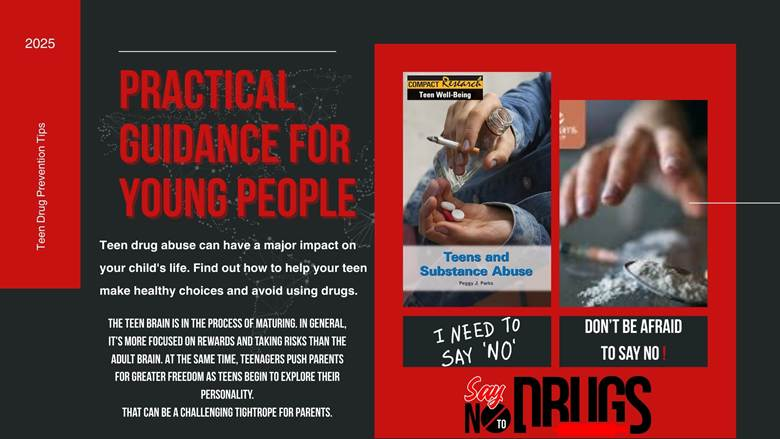
While programs and workshops provide structure, ultimately, teen drug prevention tips boil down to practical wisdom that young people can apply in real-world situations.
Understanding Why People Use Drugs
Prevention starts with understanding temptation. Young people encounter drugs for various reasons:
Curiosity: Natural desire to experiment and test boundaries
Peer Pressure: Fear of rejection or desire for acceptance
Stress Relief: Using substances to cope with academic, family, or social pressures
Escapism: Seeking temporary relief from difficult emotions or situations
Boredom: Looking for excitement or novel experiences
Self-Medication: Attempting to manage untreated mental health conditions
Acknowledging these motivations honestly allows for more effective prevention strategies than simply denying temptation exists.
Practical Tips for Saying No
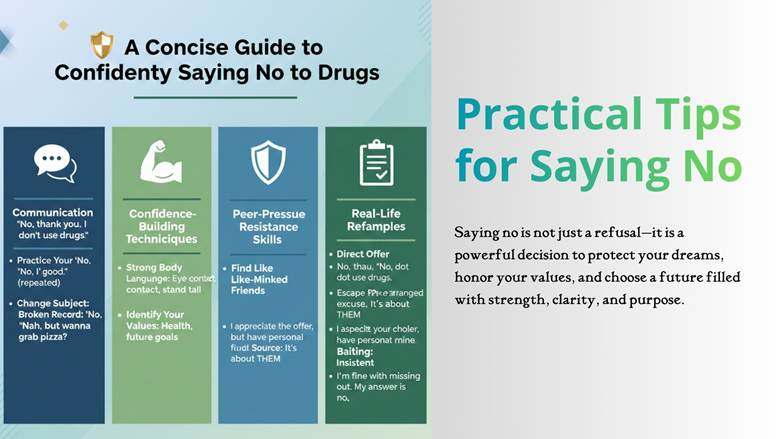
When faced with drug offers, young people need concrete strategies:
Have a Ready Response: Planning refusal statements in advance makes them easier to deliver confidently. Simple responses like “No thanks, I’m good,” “That’s not my thing,” or “I’ve got practice/work tomorrow” often work better than lengthy explanations.
Suggest Alternatives: Proposing different activities—”Let’s go get food instead” or “Want to play video games at my place?”—redirects situations without making others feel judged.
Use the Buddy System: Having friends who share your values provides built-in support and makes refusal easier. If one person says no, others often follow.
Trust Your Instincts: If a situation feels uncomfortable or risky, leaving is always acceptable. Your safety and well-being matter more than others’ opinions.
Seek Support: Talking with trusted adults—parents, counsellors, coaches, mentors—about peer pressure situations helps develop strategies and reminds you that you’re not alone.
Building Resistance Skills
Beyond specific refusal techniques, certain broader skills help young people resist substance use:
Critical Thinking: Questioning claims about drugs being harmless, analysing motivations behind offers, and evaluating long-term consequences versus short-term temptations.
Stress Management: Learning healthy coping mechanisms—exercise, creative expression, meditation, talking with friends—reduces the appeal of substances as stress relief.
Self-Confidence: A Strong sense of identity and self-worth makes peer acceptance less crucial and independent decision-making easier.
Goal Orientation: Having clear academic, athletic, career, or personal goals creates motivation to avoid anything that might jeopardise those ambitions.
Community Anti-Drug Sessions: Collective Action for Prevention
Individual programs work best when supported by broader community anti-drug sessions that mobilise entire neighbourhoods, towns, or cities around prevention.
The Community Approach Advantage
Community-wide initiatives offer several unique benefits:
Consistent Messaging: When schools, faith organisations, youth clubs, healthcare providers, and families all deliver aligned prevention messages, young people receive reinforcement from multiple trusted sources.
Resource Mobilisation: Communities can pool resources to fund comprehensive programs, train volunteers, create awareness materials, and provide intervention services that individual organisations couldn’t afford alone.
Social Norm Setting: When communities collectively reject drug use through public campaigns, policy changes, and cultural shifts, they create environments where substance use becomes genuinely countercultural.
Volunteer Networks: Community mobilisation creates armies of volunteers—from recovered addicts sharing their stories to parents monitoring after-school activities to professionals donating expertise—multiplying prevention capacity exponentially.
Large-Scale Awareness Initiatives
Some of the most impactful prevention work happens through mass mobilisation campaigns that reach thousands or even millions:
DEPTH (Drug Eradication Pan India through Health and Meditation) represents one such comprehensive initiative. This campaign combines multiple strategies:
- Mass Congregations: Large gatherings where thousands collectively pledge to avoid intoxicants, creating powerful social commitment and accountability
- Seven-Day Rehabilitation Programs: Intensive programs offering medical supervision, meditation training, counselling, and skill-building in supportive environments
- Volunteer Networks: Mobilising millions of volunteers who identify at-risk individuals in communities, conduct awareness campaigns, and provide ongoing support
- Public Demonstrations: Organising public bonfires where people voluntarily destroy their intoxicants, making visible commitments to sobriety
- Media Campaigns: Using films, music, social media, and traditional media to spread anti-drug messages widely
- Spiritual Foundation: Incorporating meditation and spiritual practices that help individuals find purpose and peace beyond substance use
Reports indicate such initiatives have helped tens of millions pledge to remain drug-free, demonstrating the power of comprehensive, community-based approaches.
Measuring Community Program Success
Effective community programs track outcomes beyond just attendance numbers:
- Attitude Shifts: Surveying community members about perceptions of drug use risks and social acceptability
- Usage Rates: Monitoring substance use prevalence through school surveys, healthcare data, and law enforcement statistics
- Treatment Seeking: Tracking whether more people access rehabilitation services when available
- Policy Changes: Documenting adoption of protective policies in schools, workplaces, and local government
- Community Engagement: Measuring volunteer participation, program attendance, and general awareness of prevention resources
Challenges in Drug Awareness Programs in India
Despite their importance, drug awareness programs in India face several persistent challenges:
- Funding Limitations: Prevention programs often struggle for resources, as policymakers may prioritize treatment and enforcement over education.
- Measuring Impact: Proving that programs prevent substance use is difficult when success means something didn’t happen—it’s easier to count people treated for addiction than people who never developed problems.
- Reaching High-Risk Groups: Young people most vulnerable to substance abuse—those experiencing trauma, mental health issues, poverty, or family dysfunction—are often hardest to reach through standard programs.
- Sustaining Engagement: Maintaining participation and enthusiasm over time challenges even well-designed programs, as prevention lacks the immediate gratification of crisis intervention.
- Adapting to New Substances: As new drugs emerge—synthetic opioids, designer drugs, vaping products—programs must constantly update materials and training to address evolving threats.
The Path Forward: Building on Success
Despite challenges, we know what works in drug prevention. The path forward requires:
Increased Investment: Societies must allocate sufficient resources to prevention, recognizing that every dollar spent preventing addiction saves many dollars in treatment, criminal justice, and lost productivity.
Evidence-Based Practices: Programs should adopt strategies proven effective through rigorous research rather than relying on intuition or tradition.
Comprehensive Approaches: Addressing individual knowledge, family dynamics, peer influences, community norms, policy environments, and broader social factors simultaneously creates synergistic effects greater than any single intervention.
Long-Term Commitment: Sustained prevention efforts over years and decades—not one-time programs or short-term initiatives—are necessary to change cultures and reduce substance abuse rates meaningfully.
Collaboration: Schools, healthcare systems, faith communities, youth organizations, law enforcement, media, and families must work together rather than in isolation.
Conclusion: Prevention as Our Greatest Hope
Drug addiction destroys lives, tears apart families, and weakens communities. But for every person struggling with addiction today, many more avoided that fate because someone cared enough to implement effective prevention programs. Drug awareness programs in India, when designed well and supported adequately, represent our greatest hope for reducing substance abuse and building healthier societies.
From anti-drug workshops that give young people tools to resist pressure, to ‘school/college awareness activities’ that reach students during vulnerable years, to ‘teen drug prevention tips’ that provide practical guidance for real-world situations, to ‘community anti-drug sessions’ that mobilise entire populations—prevention works.
Every young person who chooses not to experiment with drugs, every family spared the pain of addiction, every community that becomes healthier and safer—these are the victories of prevention. They’re quieter than treatment success stories, less visible than enforcement actions, but ultimately more powerful because they stop problems before they start.
Whether you’re an educator, parent, community leader, policymaker, or young person yourself, you have a role in drug prevention. Support programs in your community. Have honest conversations with young people. Model healthy behaviours. Create environments where substance-free living is celebrated and supported.
Together, through comprehensive, compassionate, evidence-based prevention efforts, we can build a future where fewer lives are lost to addiction and more young people reach their full potential. The work isn’t easy, and progress can feel slow, but the alternative—accepting drug abuse as inevitable—is unacceptable.
Prevention is possible. Recovery is achievable. And a drug-free future, while challenging, is within our reach if we commit collectively to making it a reality.
The fight against drug abuse begins not with treating addiction, but with preventing it. And that prevention begins with awareness, education, and community action—starting today.
FAQs – Drug Awareness Programs & Prevention
What are drug awareness programs and why are they important?
Drug awareness programs educate people about the risks of substance abuse and teach prevention skills. They help reduce addiction by stopping drug use before it starts, especially among youth.
How do anti-drug workshops help students and teenagers?
Anti-drug workshops use interactive sessions, real-life examples, and skill-building activities to help students resist peer pressure, manage stress, and make informed decisions.
At what age should drug prevention education begin?
Drug prevention education is most effective when it starts early, ideally between ages 11–14, before experimentation begins and habits form.
Are school and college drug awareness activities actually effective?
Yes. School and college awareness activities work best when they are ongoing, interactive, and supported by teachers, parents, and peer groups rather than one-time lectures.
What role do families play in drug abuse prevention?
Families play a critical role by maintaining open communication, setting clear boundaries, monitoring behaviour, and modeling healthy, substance-free lifestyles.
What are some practical teen drug prevention tips?
Teens can avoid drugs by choosing supportive friends, preparing refusal responses, managing stress through healthy activities, and seeking help from trusted adults when needed.
How do community anti-drug sessions help reduce substance abuse?
Community anti-drug sessions create collective responsibility, reinforce positive social norms, mobilize volunteers, and provide wide-reaching education and support.
Can drug awareness programs prevent addiction completely?
No program can guarantee zero addiction, but well-designed prevention programs significantly lower the risk of substance abuse and delay or prevent first-time drug use.
What challenges do drug awareness programs face today?
Common challenges include lack of funding, difficulty measuring prevention success, reaching high-risk groups, and adapting to new drugs and substances.
How can individuals support drug awareness and prevention efforts?
Individuals can support prevention by volunteering, promoting awareness, participating in community programs, encouraging open conversations, and supporting evidence-based initiatives.